
News With a Filter
- What it is: Follow two local sources and one national update, then write one takeaway.
- How often: Weekly
- Why it helps: You stay informed without getting overwhelmed or misled.
Common Questions About Settling In and Belonging
Q: What are some effective ways for recent immigrants to quickly build a supportive social network in their new community?
A: Start where repeating contact is built in: libraries, faith communities, school events, volunteer shifts, and neighborhood meetings. Choose one weekly activity and introduce yourself to two people each time, then follow up within 48 hours. Community involvement works because it creates shared purpose, and social outcomes improve when people engage in structured community learning.
Q: How can I overcome feelings of loneliness and cultural confusion while adjusting to life in the U.S.?
A: Name what you are feeling and give it a timeline, since early adjustment is often uneven. Create two anchors each week: one familiar routine from home and one small U.S. routine like a class, gym walk, or local meetup. If stress rises, limit news and choose one trusted person to reality-check your assumptions.
Q: What strategies help maintain strong relationships with family and friends back home despite the distance?
A: Set a predictable rhythm like a short call on fixed days, plus quick voice notes for everyday moments. Share one photo or story from your week and ask one specific question so conversations stay warm, not only about problems. Plan a shared activity monthly such as praying together, watching the same program, or reading the same passage.
Q: How can I find trustworthy support groups or resources that understand the challenges immigrants face?
A: Look for organizations connected to schools, public libraries, legal aid clinics, and community health centers, then ask what services are free and what referrals they can make. Trust builds when staff can explain costs, confidentiality, and timelines clearly. Remember you are not alone, and the immigrant population has increased in many regions, so immigrant focused services are often more available than they seem.
Q: What should I consider if I want to explore online business degree programs to create new career opportunities while adapting to life in the U.S.?
A: Start by clarifying your timeline, work schedule, childcare needs, and budget, then choose a program format that matches your real capacity. Compare accreditation, transfer credit, internship or project options, and whether courses cover practical skills like accounting, marketing, and entrepreneurship, and take a look at this for a quick overview of online business degree options. Connect the degree to a simple career plan: target roles, build a portfolio, and use campus career services or local workforce centers for resume and interview support.
Understanding Cultural Adjustment and Belonging
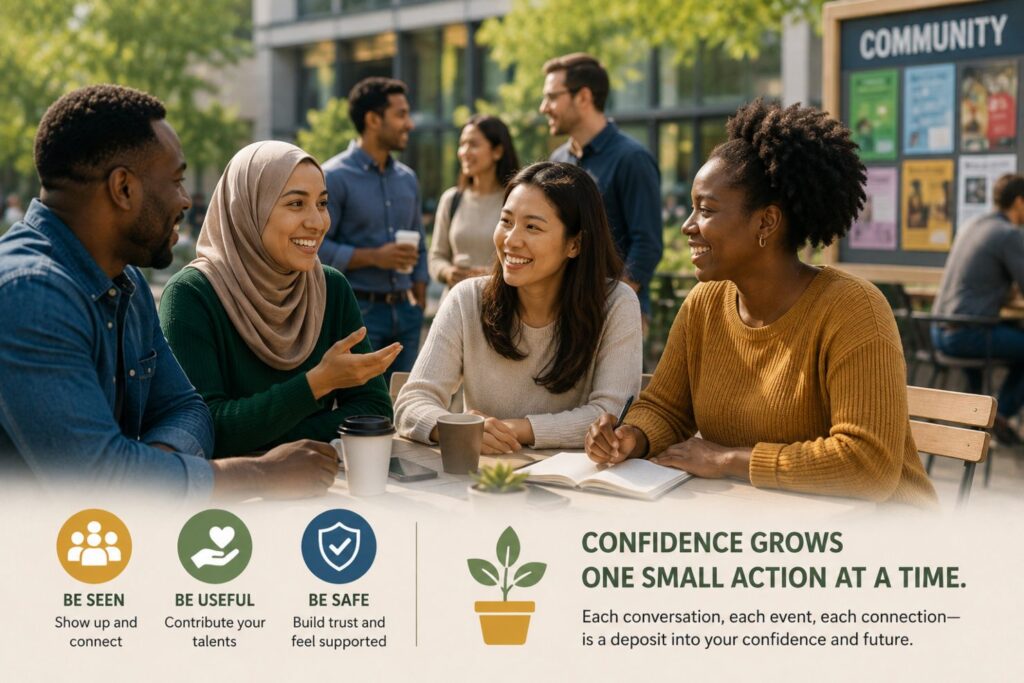
Cultural adjustment is the slow process of learning local “rules” while keeping your identity intact. A sense of community grows when you feel seen, useful, and safe with people around you. Cross-cultural understanding is the skill of noticing differences without judging them, then choosing respectful ways to respond.
This matters because integration supports emotional wellbeing, not just social life. When you have a few trusted relationships, daily tasks feel lighter, from talking with a child’s teacher to asking a coworker for clarity.
Think of confidence like a savings account. Each small action, greeting someone, joining a group chat, attending a meeting, is a deposit. Over time, those deposits become the courage to network for work, learn business norms, and advocate for your family.
One Weekly Connection Habit That Builds Belonging and Confidence
Feeling at home can take longer than expected when new cultural cues, busy schedules, and old fears make connection feel risky. A steady mindset of cultural adjustment, small, respectful choices that grow a sense of community over time, keeps community integration motivation strong without demanding perfection. With repetition, positive immigrant experiences become more common, social connection encouragement feels natural, and adaptation success stories start to sound like your own. Belonging grows faster when one small connection becomes a weekly habit. Choose one move this week, repeat it, and track the small wins that come from showing up. This is how uplifting immigrant journeys turn into stability, resilience, and real community support.
Joyce Wilson
A retired teacher who believes she can help save the Great Outdoors while also helping local economies recover