
African immigrants in the United States often arrive with valuable education, professional experience, and strong work ethics. Yet many quickly discover that building a successful career in the US is not simply a continuation of the one they left behind. Degrees may not be immediately recognized, professional licenses may require additional steps, existing networks rarely transfer across borders, and hiring decisions can sometimes be influenced by communication differences, including accent bias.
At a Glance
- Foreign degrees may require formal credential evaluation before employers or licensing boards recognize them.
- Strategic certifications can help bridge international experience with US employer expectations.
- Returning to school does not always mean starting over.
- Building a professional network in the US is often as important as updating credentials.
- Career rebuilding is a long-term investment rather than a sign that previous accomplishments no longer matter.
Why Career Rebuilding Can Feel So Difficult
Many African immigrants expect that years of education and professional success will naturally translate into similar opportunities in the United States. Instead, they may encounter unfamiliar systems that evaluate qualifications differently.
Several common obstacles include:
- Degrees that require credential evaluation before employers understand their equivalent US value.
- Regulated professions, such as nursing, engineering, teaching, or accounting, that require additional licensing.
- Professional references and networks that are based overseas.
- Hiring processes that prioritize local experience.
- Language differences or accent bias that may affect interviews despite strong qualifications.
These challenges can feel discouraging, but they are often procedural rather than personal. They reflect differences between professional systems—not a lack of ability or expertise.
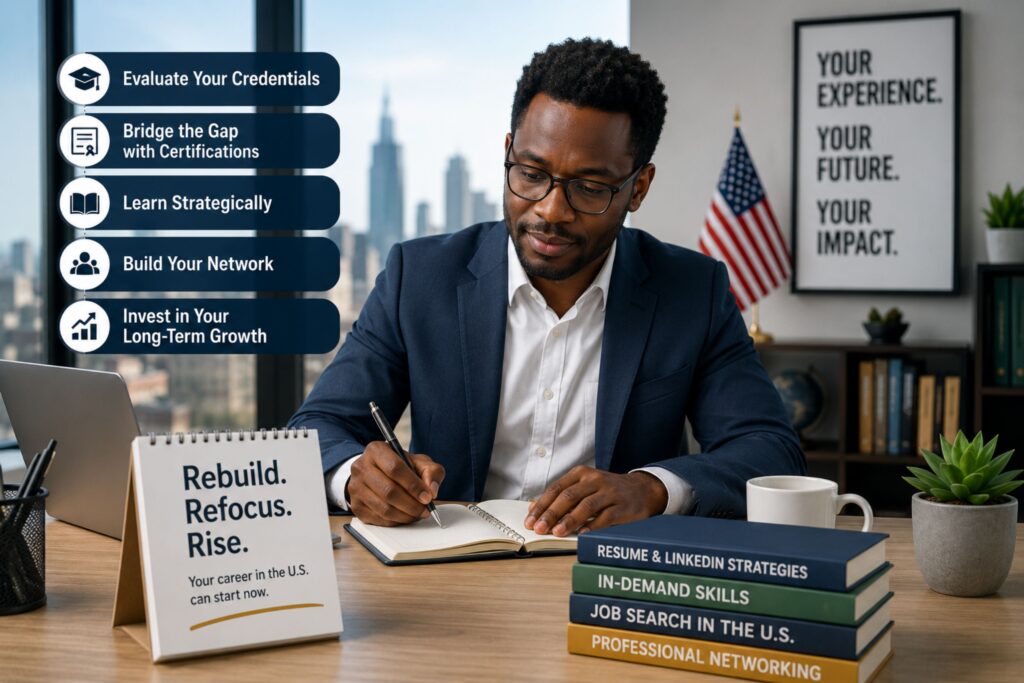
Practical Steps That Help Move Careers Forward
Many successful African immigrants rebuild their careers by approaching the process strategically instead of attempting to recreate their previous careers exactly as they were.
Career Rebuilding Checklist
- Obtain a credential evaluation from a recognized evaluation service if your degree was earned outside the United States.
- Research whether your profession requires state licensing or additional examinations.
- Identify certifications that complement—not replace—your previous education.
- Join local professional associations and networking groups within your industry.
- Update your résumé to reflect US hiring expectations.
- Seek informational interviews with professionals already working in your field.
- Continue improving professional communication while remaining confident in your identity and background.
Following these steps creates momentum and often shortens the path back into professional employment.
Choosing the Right Educational Path
Not every immigrant needs another bachelor’s or master’s degree.
Sometimes a targeted certification, bridge program, or graduate certificate provides exactly what employers need to see. In other cases, additional university education may be the right investment because it satisfies licensing requirements while expanding professional connections.
| Career Situation | Possible Next Step |
| Foreign degree not easily recognized | Credential evaluation |
| Profession requires US license | Complete state licensing requirements |
| Skills are current but employers want local credentials | Earn an industry-recognized certification |
| A foreign degree is not easily recognized | Enroll in a focused degree or certificate program |
| Experience gap after immigration | Pursue internships, fellowships, or volunteer leadership opportunities |
The goal is not collecting credentials for their own sake. It is identifying the shortest, most effective path toward meaningful employment.